Ben East at Glasgow 2026: The Stainless Steel Story Behind the Commonwealth Games Javelin
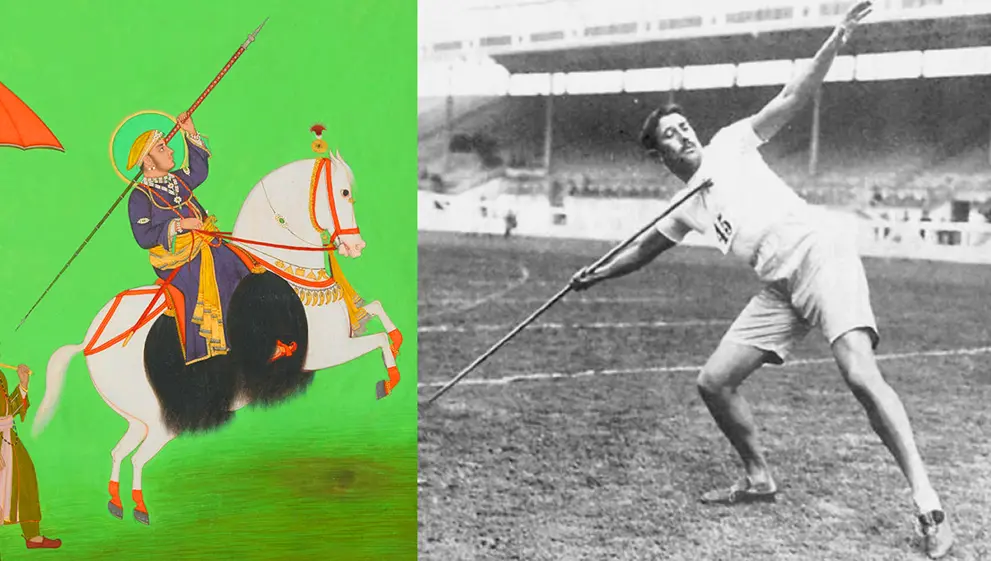
As Ben East represents Team England in the men’s javelin at the Glasgow 2026 Commonwealth Games, it’s interesting to remember that this same javelin has been around for thousands of years. What started as something that was used as a method of hunting food for the plate, developed into a regulated piece of sports equipment, designed around strict requirements for weight, balance, stiffness and aerodynamic performance. There are even javelin-like objects that were found in a coal mine in Germany that have been dated to around 400,000 years old… incredible. These ancient weapons were made from Spuce and were about 6-7ft long, the modern equivalent being between 8 ft 6 in and 8 ft 10 in.
The javelin was added to the ancient Olympic Games as part of the Pentathlon in 708BC. The javelin was thrown in 2 events with the aid of a leather thong known as an ankyle. Wrapped around the shaft and looped around the athlete’s fingers, the thong unwound during the throw giving the javelin a spiral trajectory. The first significant change happened in the early 1950s when American athlete Bud Held began experimenting with hollow wooden and later hollow metal javelins. These new further flying javelins were made by his brother Dick and were more likely to land point first. In 1953, Bud Held became the first man to throw further than 80 metres, reaching 80.41 metres.
On the 1st April 1986, the men’s javelin was redesigned by the IAAF Technical Committee. The centre of gravity was moved forwards 4cm and the surface area in front was reduced. This was to reduce aerodynamic lift, as throws were now exceeding 100m and it was becoming more and more difficult to safely stage there competitions in the confines of a stadium infield. The women’s javelin was redesigned along similar lines in 1999.
In the modern competition the rules do not specify that the head must be made from stainless steel, and not every competition javelin uses it. However, mane modern javelins combine an aluminium shaft with a stainless-steel tip, while others use conventional, galvanised or chromed steel. Stainless steel is a perfect metal for the javelin point as it has to withstand repeated impact with the ground, as well as exposure to damp. It’s strong, corrosion resistant and retains it shape.
We can’t confirm that Ben East (Team England’s javelin thrower from Team Kennet Triathlon & AC) will use a stainless-steel-tipped javelin in but it’s highly likely that Ben and many others competitors will.
The reasons stainless steel is so perfect for javelins is the same for our bespoke stainless-steel products. Our stainless steel is selected for its strength, corrosion resistance and reliability when used in worktops, sinks, tables and cupboards. And while a competition javelin may travel further than a DSM worktop, both depend on choosing the right material from the very start. That is a point worth making.
For more stainless steel sports stories on our website have a look at these past articles:
Stainless Steel, Bing Crosby, Golf and the Pittsburgh Persimmon
1948 was the year when Stainless Steel was first used in skis
Visit the DSM Stainless Products website for more information on Ben East at Glasgow 2026: The Stainless Steel Story Behind the Commonwealth Games Javelin
ENQUIRY FORM
More News