Low-Maintenance Garden Ideas Using Decorative Aggregates
Many people assume that a beautiful garden must involve a great deal of maintenance. In reality, some of the most attractive outdoor spaces use simple materials, such as garden stones, in a clever and minimal way.
Stone aggregates, including gravel, pebbles and cobbles, can help create a garden that looks tidy, drains well and requires far less upkeep than a traditional design based around lawns and flower beds. They can be used to replace all or part of a lawn, or to create paths, borders and seating areas.
When used properly, decorative aggregates can significantly reduce the need for watering, weeding and many of the other regular tasks associated with maintaining a lawn.
Rethink your lawn with aggregates
Lawns can look attractive, but they require regular mowing, watering, weeding and edging to stay in good condition. They can also become patchy and untidy, particularly in small or awkwardly shaped gardens where the effort involved may outweigh the benefits.
Replacing part or all of a lawn with decorative aggregates, such as pebbles or cobbles, can make the garden much easier to manage while still creating an attractive finish.
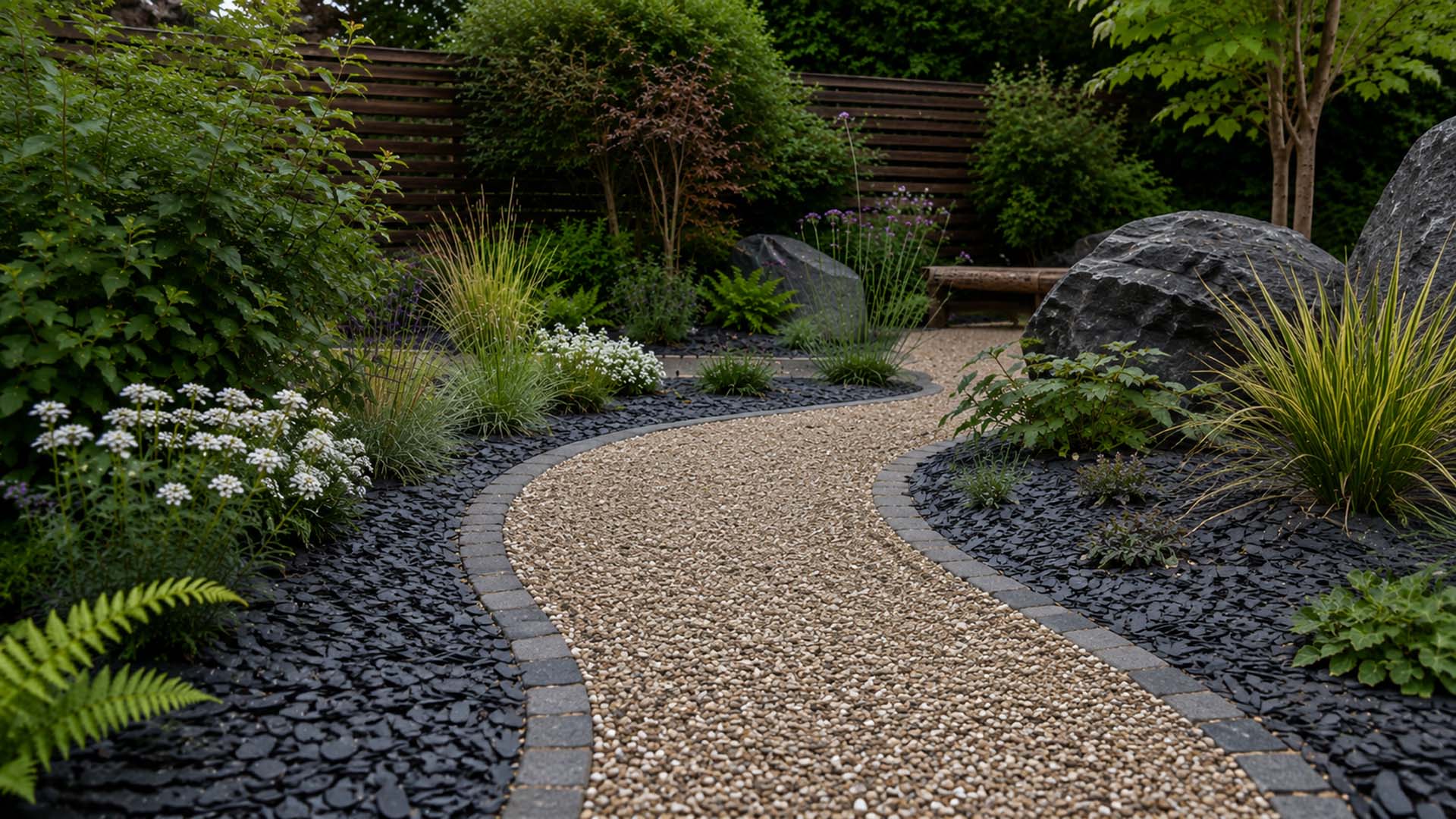
Create simple garden paths
Stone aggregates, particularly gravel, are ideal for creating low-maintenance garden paths. They can also help protect grassed areas by reducing foot traffic and limiting wear.
For a stable, long-lasting path, prepare the area by removing weeds, applying weed killer if required, and laying a suitable sub-base. A weed-control membrane should then be fitted before the aggregate is spread.
Simple timber edging can help keep the path neat and stop the stones spreading into lawns or planting areas. Smaller gravel is generally more comfortable underfoot, while larger chippings can create a more striking decorative effect.
Use aggregates in borders
Decorative aggregates can give borders and flower beds a more finished appearance while also making them easier to maintain.
A layer of gravel, slate or decorative chippings around plants can help suppress weeds and reduce soil erosion during periods of heavy rain or strong winds.
This can work particularly well around shrubs and ornamental grasses. The colour of the aggregate can also influence the overall look of the garden. Light-coloured gravel can brighten shaded areas, dark slate can create contrast, and warm-toned chippings can soften a more traditional planting scheme.
Using a consistent colour theme across aggregates and other garden features can help the whole space feel more considered and complete.
Reduce mud and improve drainage
Many gardens have areas that remain muddy and difficult to use after rainfall. Aggregates can help improve drainage when used as part of a properly prepared surface by reducing oversaturation in the soil below.
This can be especially useful around sheds, gates and bin storage areas, helping create safer and more practical walking surfaces.
Aggregates alone will not solve serious drainage problems, but they can form part of a more effective layout when combined with suitable ground preparation and edging.
Create seating areas without paving
Paving slabs are not essential when creating a garden seating area. Gravel or decorative chippings can provide a relaxed and affordable alternative, particularly where formal paving would feel too heavy or prove impractical due to space or cost.
Choose a stone size that remains stable beneath furniture legs and install it over a compacted base.
A defined edge made from timber sleepers, metal edging or setts will help the area look intentional rather than temporary.
Choose the right aggregate
Different aggregates are suited to different uses.
Gravel is practical for paths and driveways, while blue slate chippings work well in borders and modern garden designs. Pebbles are often used decoratively around pots and water features, while cobbles add texture but are generally less suitable for walking surfaces.
Before ordering, consider the size, colour and texture of the aggregate, as well as how the area will be used. A stone that looks attractive in a small sample can feel very different when spread across a large space.
Using some variation in size, colour and texture can also create a more natural and visually interesting finish.
Conclusion
Whatever the size or style of your garden, decorative aggregates offer a practical way to reduce maintenance without compromising appearance.
They can replace lawn areas, form paths, tidy borders, improve drainage, enhance flower beds and create low-maintenance seating spaces.
The best results come from careful preparation and thoughtful design. When aggregates are combined with suitable planting, edging and a clear layout, they can help create an attractive outdoor space that is much easier to look after.
Visit the Mainland Aggregates Ltd website for more information on Low-Maintenance Garden Ideas Using Decorative Aggregates
ENQUIRY FORM