Acoustic Panels vs Soundproofing for Offices: What's the Difference?
09/01/2026
What Acoustic Panels Do in Offices
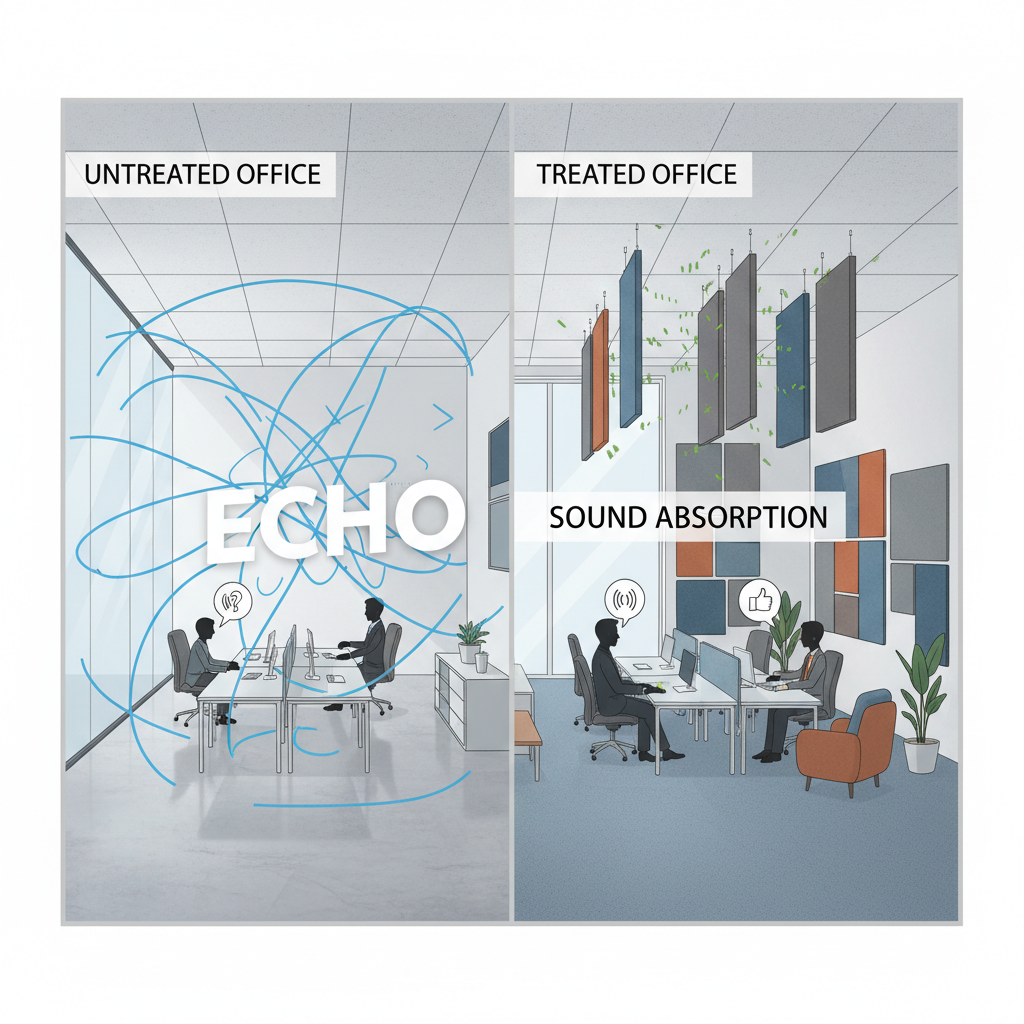
Acoustic panels are developed to improve the sound within a room. They:
Reduce echo and reverberation Improve speech clarity
Make spaces feel calmer and more controlled
In an office, acoustic panels are ideal for:
Meeting rooms and boardrooms
Open-plan offices and co-working spaces
Reception areas and corridors
Call centres and sales floors�
By taking in sound energy energy, panels stop it bouncing around the room. This makes conversations easier to follow and reduces that �boomy� or �tinny� sound you frequently hear in hard, modern spaces. What sound-absorbing panels don't do is stop sound travelling through walls, floors or ceilings.
What Soundproofing Does in Offices
Soundproofing is about blocking or reducing sound transmission between spaces. It's used when you need:
Privacy between meeting rooms and offices
To reduce noise from neighbouring units or busy roads
To stop sound travelling between floors
Effective soundproofing usually involves:
Adding mass to walls, floors or ceilings
Decoupling structures so they vibrate less
Using specialist materials including soundproofing mats and resilient layers
At Advanced Acoustics we supply a selection of soundproofing products for walls, floors and ceilings, including soundproofing mats and acoustic underlay, which are commonly used in commercial projects.
Common Office Scenarios and What You Actually Need
To make this more concrete, here are a few typical office situations and the solutions we'd usually recommend:
Echoey meeting room where people struggle to hear clearly
Problem: Poor acoustics inside the room.
Solution: Acoustic panels on the walls and/or ceiling.
Boardroom next to an open-plan office where confidential conversations can be overheard
Problem: Sound leaking through the wall.
Solution: Soundproofing to the party wall, plus sound-absorbing panels inside the boardroom to improve clarity.
Shared office where you can hear the neighbours through the party wall
Problem: Sound transmission between units.
Solution: Wall soundproofing (e.g. additional layers with soundproofing mat), with sound-absorbing panels as an optional extra for internal acoustics.
Open-plan office that feels loud and tiring
Problem: Excess reverberation and overlapping conversations.
Solution: Acoustic panels on walls and ceilings, possibly combined with some layout changes.
How to Decide What Your Office Needs
A simple way to think about it is: If the problem is �it's too loud and echoey inside this room�, you're likely to need acoustic panels. If the problem is �people outside this room can hear us� or �we can hear the neighbours�, you're likely to need soundproofing.
In many commercial projects, you'll benefit from a combination of both. If you're not sure, describe what you're experiencing:
Where you hear the noise
When it's worst
Whether the issue is echo, privacy, or both
We can then recommend whether you need sound-absorbing panels, soundproofing, or a combination.
The next step? For echo and clarity problems, start with our Office Acoustic Panels Page. For privacy and noise transmission problems, explore our Soundproofing Solutions and get in touch with your project details.
Previous: Steps to Fix Low-Frequency Noise Issues Using Wall Acoustic Foam Panels
Next: Why Office Acoustic Panels Fail to Reduce Echo in Shared Meeting Rooms
Visit the Advanced Acoustics Ltd website for more information on Acoustic Panels vs Soundproofing for Offices: What's the Difference?
ENQUIRY FORM